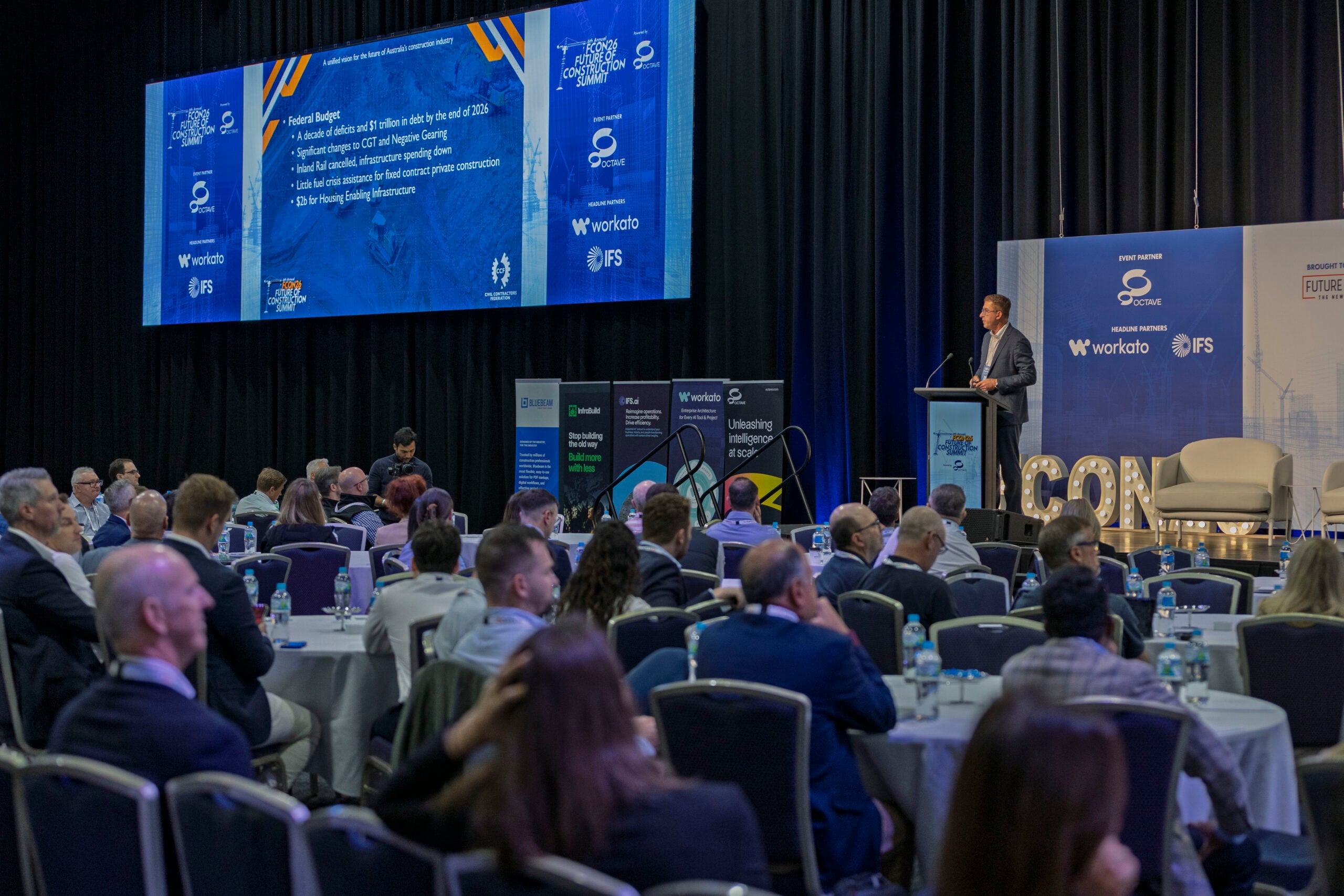
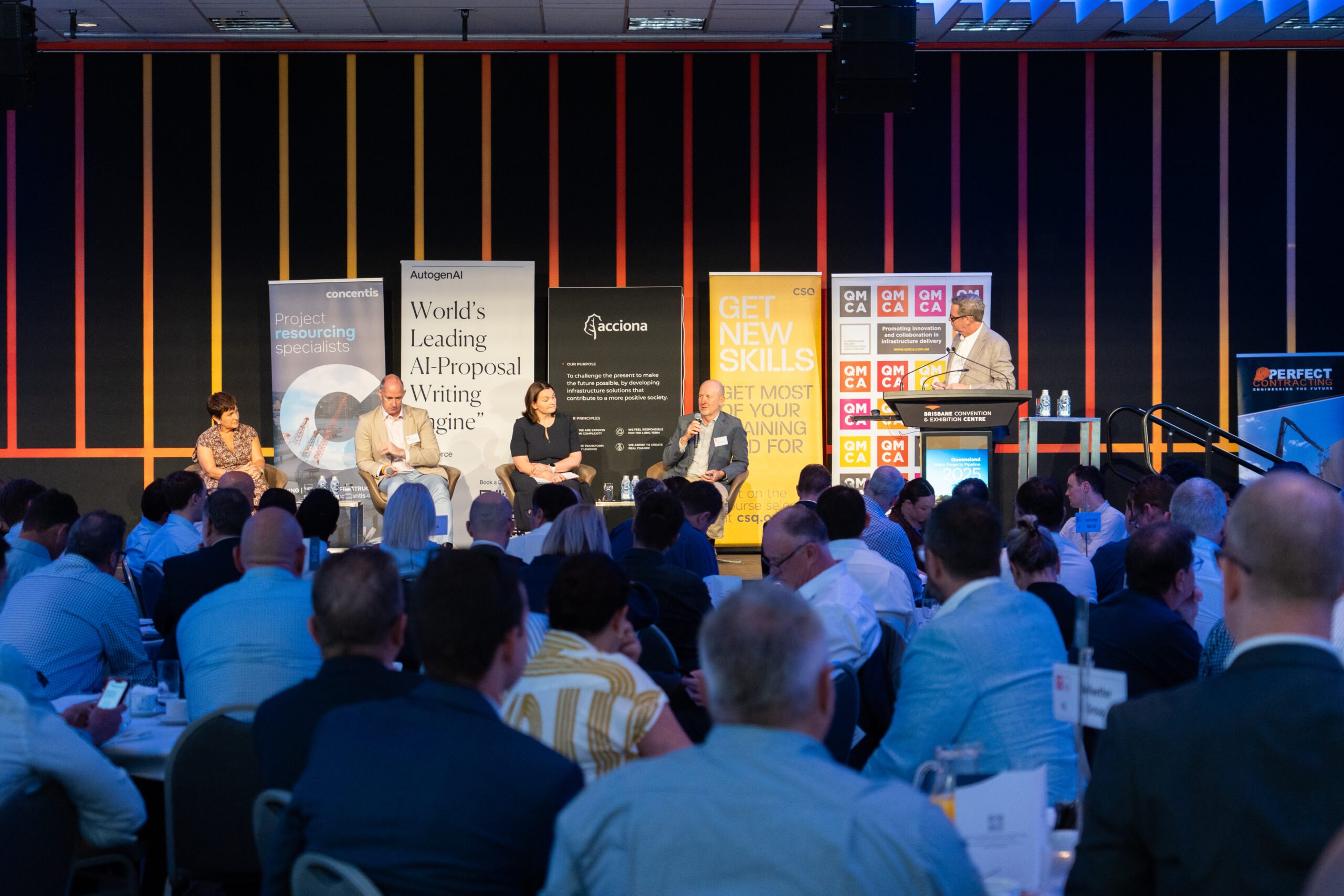
As a proud Gold Sponsor of the 2025 Queensland Major Projects Pipeline Report (QMPPR) , Concentis was represented across the launch events in Brisbane, Toowoomba, Townsville and Gladstone, standing alongside the people and organisations building Queensland’s future.
This year’s QMPPR confirms what many across industry have been feeling,
Queensland is entering one of the busiest, most transformative delivery periods in its history.
With the Major Engineering Projects forecast set to reach $127.5 billion over the next five years, marking a 22.7% increase on last year. It’s bigger, more diverse, and more regionally distributed than ever before.
This growth is being driven by large-scale investment in roads and bridges, energy transition projects across regional Queensland, and the inclusion of the 2032 Olympic Games related infrastructure for the first time.
But with this uplift comes a critical challenge:
Workforce demand is set to surge from 26,000 to nearly 41,000 workers by 2030, which is a 55% jump.
Delivering the pipeline will require strong coordination, practical innovation, and targeted investment in our people.
A Pipeline That Signals Confidence and Clarity
What makes this year’s pipeline stand out is not only its size, but the strengthened level of certainty behind it.
Funded vs Unfunded: A Clearer Picture
- $78.1B of the pipeline is funded, up 21.7% from 2024.
- $49.4B remains unfunded, with most uncertainty concentrated in regional resource heavy areas.
While the unfunded portion is still significant, the proportion of funded work has improved, giving industry a far clearer line of sight on what is actually expected to proceed in the next five years.
What This Means for The Industry
Funded activity will peak by 2028 and if unfunded projects also proceed, annual major project work could hit $29.4B, surpassing the heights of the 2012-13 resources boom.
But higher volumes bring sharper and tighter constraints:
- Rising construction costs (forecast +7% in 2025, +6% annually to 2028)
- Approval bottlenecks
- Material supply pressures
- An already-tight labour market across regional Queensland
It’s a very positive pipeline, but one that will require coordinated action to deliver.
Our Perspective: Why the QMPPR Matters
For Mark Medelis, Managing Director at Concentis, the QMPPR has always been more than a report.
“The QMPPR provides clarity and confidence to the market. When everyone has the same forward view, they plan better and when the market plans better, everyone benefits.”
After attending every launch since 2016, Mark says sponsoring this year’s series was a natural next step.
“This year we decided to step up and sponsor because we see this space as a key growth opportunity for our business. The report brings together the people and organisations shaping Queensland’s future, and that’s where Concentis belongs.”
Regional Outlook: A Mixed but Promising Picture
The outlook is strong but uneven across Queensland’s regions.
Regions with major uplift:
- Fitzroy (+$6.5B)
- Brisbane (+$4.5B)
- Sunshine Coast (+$6.5B)
Regions facing pipeline declines or uncertainty:
- Townsville (down $1.6B)
- Wide Bay (down $3.5B)
- Gold Coast (down $0.9B)
These fluctuations make workforce strategy, talent engagement, and regional capability planning more important than ever.
With active clients and contractors in Gladstone and Townsville, we see firsthand how regional certainty (or lack there of) influences workforce availability, project mobilisation, and long-term talent planning.
In areas like Gladstone, where energy transition and industrial projects continue to gain momentum, workforce planning is already a significant focus. Meanwhile, in Townsville, the softer near-term pipeline reinforces the importance of long-range visibility so capability can be retained and redeployed effectively.
As Mark notes: “The regional breakdown is invaluable. It helps us and our clients see where long-term opportunity exists, and how to plan ahead with confidence.”
For us, these insights aren’t theoretical, they directly shape how we support clients, how we can prepare our workforce pipelines, and how we help regional Queensland meet the delivery demands coming over the next decade.
Meeting the Workforce Challenge
With labour demand expected to reach 41,000 workers by 2030, the next decade will be shaped by whether we have the skills and capacity to meet it.
Many of the projects driving demand, especially energy, water, and Games infrastructure, are in regions where skilled labour is already stretched thin.
Concentis is uniquely positioned to support organisations through:
- Workforce planning
- Early talent pipeline development
- Attraction strategies for niche capability
- Sourcing skilled roles across engineering, project delivery, and construction
- Retention strategies during high-demand project phases
“We help clients anticipate where the skills gaps will be and start building their talent pipeline early,” Mark says. “That’s where we make the biggest impact.”
Collaboration for a Common Goal
One of the QMPPR’s strongest messages is the need for a industry wide collaboration.
“Delivering Queensland’s project pipeline isn’t a one-company job,” Mark says. “It takes a coordinated industry effort and the QMPPR brings everyone together around a shared purpose.”
At Concentis, we’re committed to being part of this collaborative effort, supporting the workforce capability and talent strategy that will determine Queensland’s delivery success.
Looking Ahead
The projects highlighted in the pipeline, from energy transition to transport, resources and Olympic infrastructure, will shape Queensland for decades to come.
They’re not just major projects.
They’re drivers of economic growth, community development, and long-term prosperity.
With our insight, networks, and people-first approach, Concentis is ready to support the organisations who will deliver them.
“Queensland has a huge decade ahead,” Mark says. “The QMPPR helps make sure we’re ready for it.”