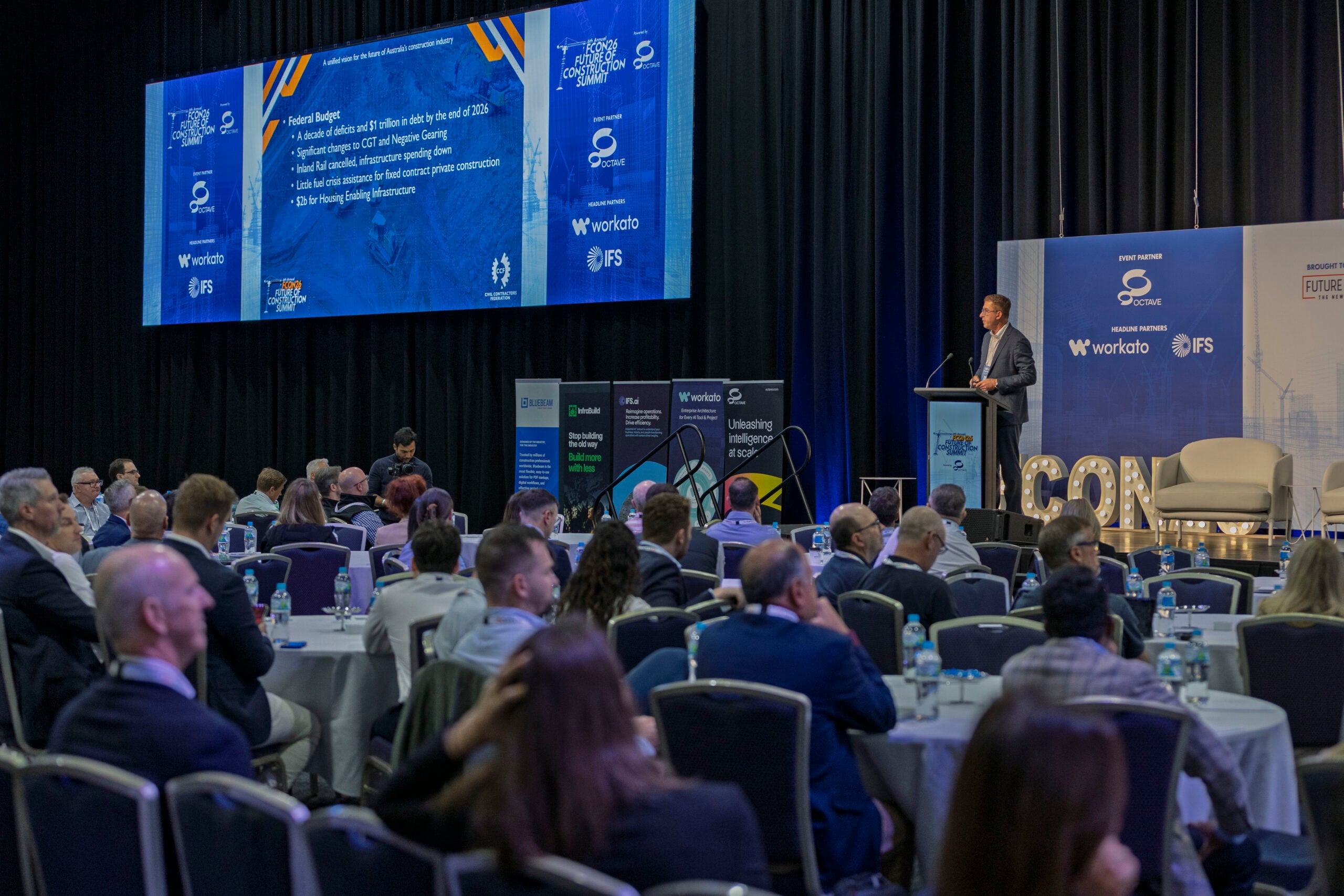
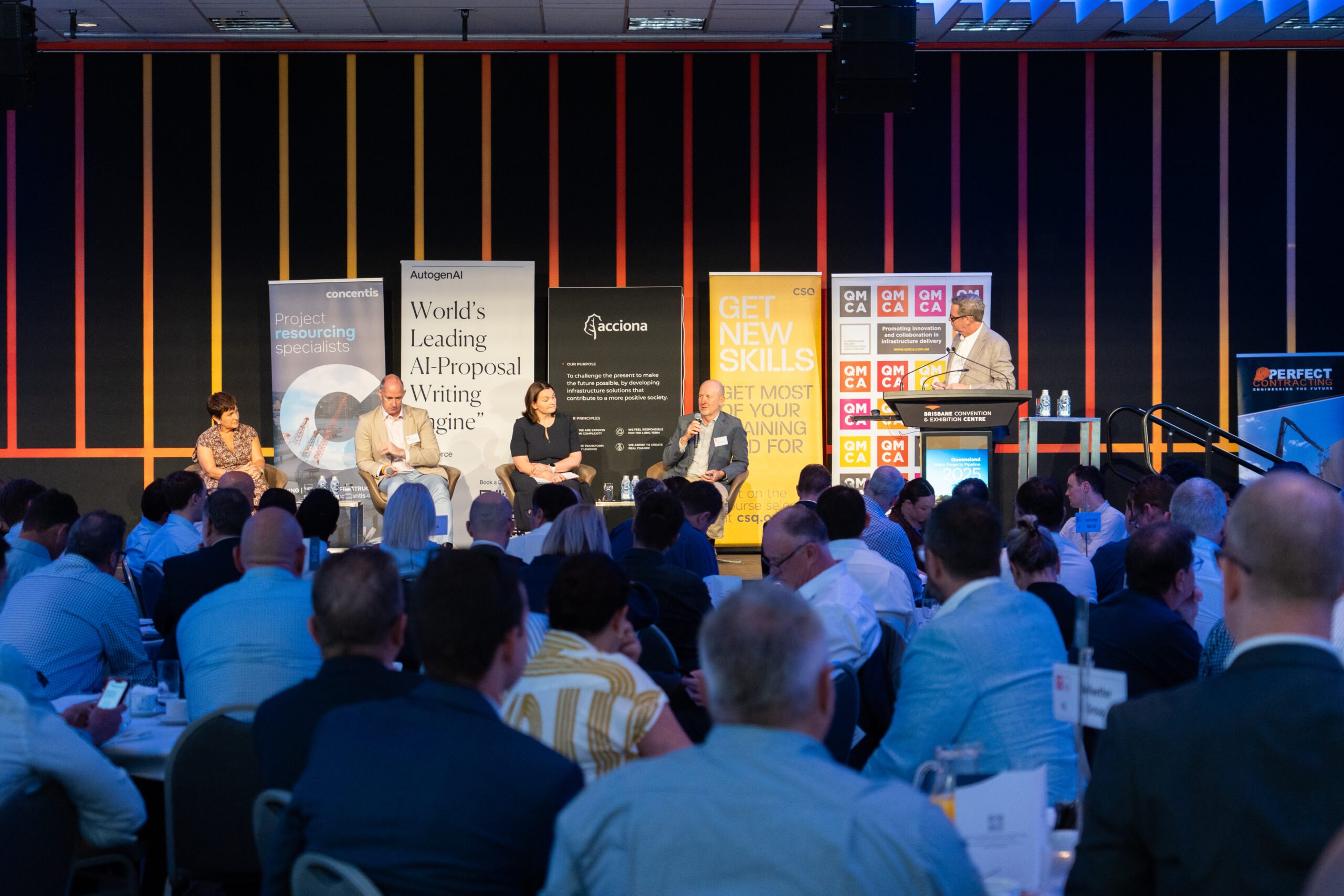
The Future of Construction Summit (FCON 2026) once again brought together some of Australia’s leading voices across infrastructure, construction, engineering and technology to explore the challenges, opportunities and innovations shaping the future of project delivery.
As first-time exhibitors, the Concentis team was proud to be part of the event, connecting with industry leaders, project professionals and partners from across the country. The summit provided a valuable opportunity to discuss the realities facing the sector and gain insight into the trends that will influence how projects are planned, delivered and resourced in the years ahead.
One of the strongest themes throughout the event was the increasing pressure being placed on Australia’s construction and infrastructure industries. With more than $242 billion worth of major infrastructure projects planned or underway nationally, demand continues to grow across transport, energy, water, resources and housing. At the same time, organisations are navigating workforce shortages, rising costs, tighter project margins and increasing expectations around sustainability and project outcomes.
While these challenges are not new individually, industry leaders agreed that the combined impact is creating a more complex delivery environment than ever before. Projects are larger, stakeholder groups are broader, supply chains are unpredictable and the expectation to deliver on time and on budget has never been greater.
A recurring discussion throughout the summit centred around productivity and what it truly means for the industry. Rather than focusing solely on labour shortages, many speakers highlighted the importance of planning, collaboration, leadership and decision making. Productivity losses often occur long before construction begins, through fragmented information, delayed approvals, late changes and disconnected project teams.
Technology and digital transformation also featured heavily across the two days. While digital engineering, artificial intelligence and integrated data platforms continue to evolve, there was a clear message that technology alone is not the solution. The organisations seeing the greatest success are those incorporating digital capability into their delivery models, improving visibility across projects and using data to support faster, more informed decisions.
Workforce capability was another major focus. Australia’s construction industry is expected to require hundreds of thousands of additional workers over the coming years, but discussions extended beyond recruitment alone. Leaders spoke about the importance of creating attractive career pathways, investing in leadership development, supporting diversity and fostering workplace cultures where people can thrive.
For Concentis, these conversations strongly aligned with what we see every day across the industries we support. As workforce demands continue to evolve, organisations are increasingly looking for more than technical skills alone. They are seeking adaptable professionals, strong leaders and collaborative teams capable of navigating increasingly complex project environments.
One of the most valuable aspects of FCON 2026 was the opportunity to hear directly from industry leaders who are actively delivering major projects across Australia. Their insights reinforced the importance of early collaboration, integrated delivery models, strong governance and investing in people as key drivers of successful project outcomes.
As the construction and infrastructure sectors continue to evolve, events like FCON provide an important platform for sharing ideas, challenging traditional approaches and learning from organisations that are successfully navigating industry change.
A big thank you to everyone who stopped by the Concentis stand throughout the summit.
We enjoyed the opportunity to connect with clients, candidates, industry partners and fellow exhibitors, and we’re excited to continue supporting the people and projects shaping Australia’s future.
If one thing became clear throughout the event, it’s that the future of construction won’t be defined by technology alone. It will be driven by the organisations that successfully bring together people, capability, innovation and collaboration to deliver better project outcomes.
And that’s a future we’re excited to be part of.